
Central Air Conditioner Installation in Massachusetts
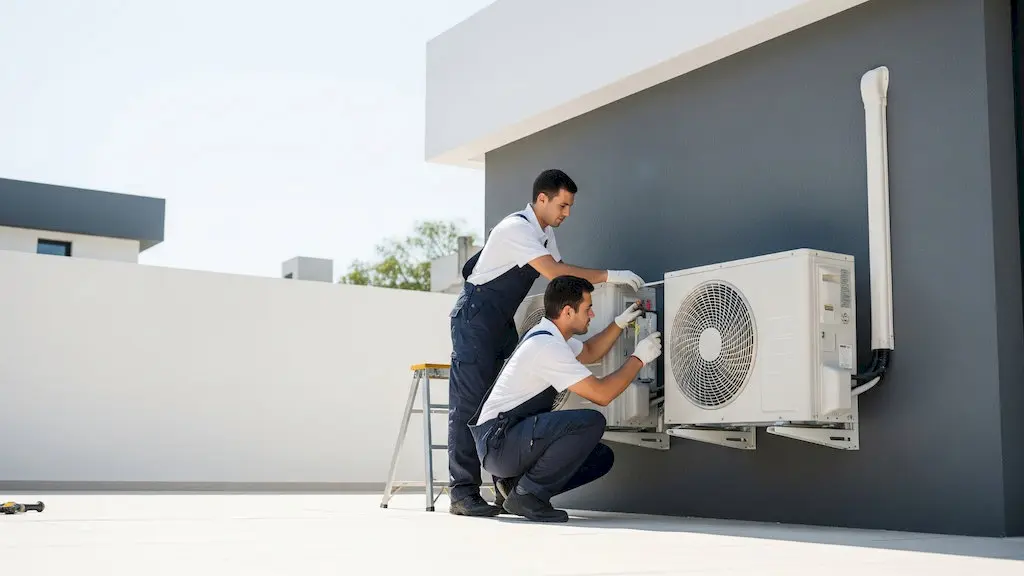
The bigger decision is whether to install cooling-only central air or a heat pump that also replaces your heating: conventional central AC earns no Mass Save rebate, while a qualifying whole-home heat pump unlocks up to $8,500.
What this means for a Massachusetts homeowner
Central Air Conditioner Installation in Massachusetts is a subset of the broader air conditioner installation decision. The core trade-offs — cost-after-rebate, sizing accuracy, installer credentials, equipment list eligibility — are the same as on the Air Conditioner Installation pillar; this page focuses on what is specific to central air conditioner installation.
How this affects your Mass Save eligibility
Mass Save heat pump rebates are awarded based on three things: the equipment being on the Heat Pump Qualified Products List (HPQPL), an installer enrolled in the Heat Pump Installer Network (HPIN), and a Manual J load calculation that supports the proposed sizing. Whichever variant of central air conditioner installation you're considering, those three boxes still need to be checked — without exception. See the Massachusetts HVAC Rebates Hub for the full 2026 rebate tier breakdown.
Should you install central air conditioning or a heat pump?
If you want cooling only and your furnace is newer, conventional central air conditioning is the cheaper install. If your heating system is also aging, a whole-home heat pump replaces both at once — and it is the only path that unlocks the 2026 Mass Save rebate of up to $8,500. The cost-after-rebate comparison:
| Cost factor (2026) | Central AC | Whole-home heat pump |
|---|---|---|
| Install cost (before rebate) | $5,000–$12,000 | $12,000–$18,000 |
| Mass Save rebate | None — conventional AC is not rebate-eligible | Up to $8,500 ($2,650/ton, whole-home) |
| Net cost after rebate | $5,000–$12,000 | $3,500–$9,500 |
| Also replaces heating? | No — the furnace or boiler stays | Yes — one system heats and cools |
| 0% HEAT Loan (up to $25,000) | No | Yes |
The federal §25C and §25D tax credits expired December 31, 2025 and no longer offset either option, so Mass Save is the primary 2026 incentive — and only a qualifying heat pump captures it. See the Massachusetts HVAC Rebates hub for the full 2026 tier detail.
What to ask your installer
- Are you enrolled in the Mass Save Heat Pump Installer Network (HPIN)? Provide your installer ID.
- What's the specific make/model you're proposing, and is it on the current Mass Save HPQPL?
- Will you provide the Manual J load calculation summary with the quote?
- What's the itemized cost-after-rebate number?
- What's the equipment warranty and the labor warranty?
Massachusetts incentives
Mass Save rebates that apply to this install
See the full Mass Save rebates hubVerified 2026-09-19
Whole-Home Heat Pump Rebate
$2,650 /ton
Capped at $8,500 per home
The installed heat pump must be the sole source of heating and cooling for the spaces served. Equipment must be ENERGY STAR Cold Climate certified and listed on the Mass Save Heat Pump Qualified Products List (HPQPL). A Manual J load calculation is needed to qualify for the sizing bonus and is industry-standard practice on Mass Save projects.
Partial-Home / Supplemental Heat Pump Rebate
$1,125 /ton
Capped at $8,500 per home
Heat pump installed alongside an existing primary heating system. Equipment must be on the HPQPL. Lower per-ton rebate reflects supplemental rather than sole-source use.
Basic Heat Pump Rebate
$250 /ton
Capped at $2,500 per home
New for 2026. Applies to replacing an existing heat pump with a new qualified HPQPL-listed heat pump, or conditioning a previously unconditioned space.
$500 Right-Sized Equipment Bonus Partial-home
Partial-home installs only. Equipment must be sized to meet 90–120% of the total heating load at the outdoor design temperature, documented via an ACCA Manual J load calculation submitted with the rebate application.
$500 Weatherization Bonus Partial-home
Partial-home installs only. Requires a Mass Save Home Energy Assessment plus installation of the recommended weatherization (typically air sealing and insulation) within one year prior to or up to six months after the heat pump installation.
Financing
Mass Save HEAT Loan
0% APR up to $25,000
- Below 135% of State Median Income: 7 years (84 months)
- 135%–300% of State Median Income: 5 years (60 months)
- Over 300% of State Median Income: 3 years (36 months)
Subject to bank underwriting through participating Massachusetts lenders. Covers equipment + installation costs for qualifying high-efficiency upgrades (heat pumps, ductless mini-splits, insulation, water heaters, and batteries enrolled in ConnectedSolutions). A Home Energy Assessment is mandatory before financing a whole-home heat pump. Households below approximately 81% SMI typically route to Mass Save's no-cost / enhanced-rebate programs rather than the HEAT Loan.
No federal heat pump tax credit applies in 2026.
- Section 25C Energy Efficient Home Improvement Credit (heat pump portion) (30% of cost up to $2,000 annually for qualifying heat pump installations (inflation reduction act expansion)) ended for property placed in service after 2025-12-31 under the One Big Beautiful Bill Act (P.L. 119-21).
- Section 25D Residential Clean Energy Credit (geothermal portion) (30% of installed cost for ground-source (geothermal) heat pumps, with no dollar cap) ended for property placed in service after 2025-12-31 under the One Big Beautiful Bill Act (P.L. 119-21).
Status as of 2026-09-19: neither 25C nor 25D has been reinstated or replaced by Congress. Pending bills (e.g. H.R. 616) have not advanced. Pre-2026 §25D installs may carry forward unused credits.
Rebate amounts and eligibility verified 2026-09-19 against primary program documentation. We re-check before any publish.
Get a quote using these ratesMore on Air Conditioner Installation
Related Air Conditioner Installation guides
- Central AC Installation in MassachusettsCentral AC installation in Massachusetts costs $5,000 to $12,000 in 2026, including the ductwork tie-in and a new outdoor condenser. The install is fastest
- Heat Pump Installation in MassachusettsHeat pump installation in Massachusetts typically runs $12,000 to $25,000 before rebates. Whole-home installs qualify for the Mass Save heat pump rebate of
- HVAC Replacement in MassachusettsFull HVAC replacement in Massachusetts ranges $8,000 to $30,000 depending on system type. Replacing an aging furnace or AC with a qualifying heat pump unlo
- Mini-Split Air Conditioner Installation in MassachusettsMini-split air conditioner installation in Massachusetts runs $4,000 to $9,000 per zone, with most homeowners installing 3–5 zones for whole-home coverage.
Compare other Massachusetts HVAC system types
- Ductless Heating & Cooling Units in MassachusettsDuctless heating and cooling units — also called mini-split heat pumps — typically cost $4,000 to $9,000 per zone installed in Massachusetts and qualify fo
- Geothermal Heating & Cooling in MassachusettsGeothermal heating and cooling in Massachusetts costs $30,000 to $60,000 for a typical residential install, with Mass Save geothermal rebates available; th
- AC Installation Near Me (Massachusetts)Searching for AC installation near you in Massachusetts means choosing between standard central AC ($5,000–$12,000) and rebate-eligible heat pump systems (
Frequently Asked Questions
- How much does AC installation cost in Massachusetts in 2026?
- AC installation in Massachusetts typically costs $5,000–$12,000 for central air, $4,000–$9,000 per zone for ductless, and $12,000–$25,000 for whole-home heat pump systems. After Mass Save rebates of up to $8,500, heat pump systems often net the lowest out-of-pocket cost.
- Does central air qualify for Mass Save rebates?
- No. Standard central air conditioning does not qualify for Mass Save heat pump rebates. To unlock the rebate of up to $8,500, the system must be a qualifying heat pump (central ducted, ductless, or geothermal) listed on the Mass Save Heat Pump Qualified Products List.
- How long does AC installation take in a Massachusetts home?
- Most central AC installations in a Massachusetts home take one to three days. Ductless mini-split installs typically take one day per two to three zones. Adding new ductwork to an existing home can extend a project by several days.
- Is a heat pump or central AC better for a Massachusetts home?
- For most Massachusetts homes, a cold-climate heat pump beats central AC on long-term economics: it replaces both heating and cooling with one electric system, and it qualifies for Mass Save rebates of up to $8,500 in 2026. Central AC only makes sense when the existing heating source will stay in place.
See your real cost after Mass Save rebates.
Connect with a vetted Massachusetts HPIN installer in minutes — no obligation.